
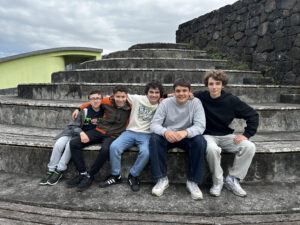
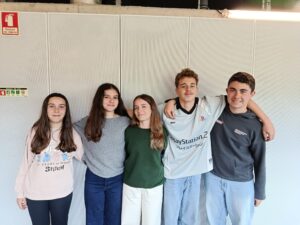
A equipa Astros Nó Atlântico, da Escola Básica e Secundária da Madalena, na ilha do Pico, venceu a 13.ª edição do CanSat Portugal, garantindo a representação de Portugal na final europeia do CanSat, promovida pela Agência Espacial Europeia (ESA), que decorre no próximo dia 6 de junho, nos Países Baixos.
O projeto apresentado destacou‑se pela sua inovação e aplicação prática de conceitos de ciência e engenharia, evidenciando elevados níveis de competência técnica e trabalho em equipa. Importa ainda salientar que alguns dos alunos vencedores participaram anteriormente no CanSat Júnior Açores, iniciativa regional que contribuiu para o desenvolvimento das suas competências científicas e tecnológicas.
Esta conquista constitui um motivo de orgulho para a ilha do Pico e para a Região Autónoma dos Açores, reforçando a importância dos projetos educativos na área espacial.
(Ult Alteração 2026-05-22 – 11:50)
22 MAIO – SEXTA-FEIRA
09:00 – 10:00
Sessão de abertura do CanSat Junior Açores
Local: INCUBA +
10:00 – 12:00
Trabalho autónomo das equipas
Apresentações iniciais ao júri
Inspeções técnicas
Local: INCUBA+
12:00 – 14:00
Almoço
Local: INCUBA +
14:00 – 17:00
Trabalho autónomo das equipas
Apresentações iniciais ao júri
Inspeções técnicas
Local: INCUBA +
18:00 – 19:30
Jantar
Local: Hotel Sta Maria
19:30 – 20:00
Briefing com as equipas e organização
Local: Hotel Sta Maria
23 MAIO – SÁBADO
PARTIDA DAS EQUIPAS PARA O LOCAL DOS LANÇAMENTOS (Malbusca)
08:00 – 08:40
GRP 1 – 8 equipas
10:00 – 10:40
GRP 2 – 7 equipas
LANÇAMENTOS
09:00 – 11:00
Lançamento dos CanSat (GRP 1)
Local: Malbusca
11:00 – 13:00
Lançamento dos CanSat (GRP 2)
Local: Malbusca
REGRESSO DAS EQUIPAS A VILA DO PORTO
11:00 – 11:40
GRP 1 – 8 equipas
Local: Malbusca
13:00 – 13:40
GRP 2 – 7 equipas
Local: Malbusca
NOTA: O Grupo 1 regressa no autocarro que transporta o Grupo 2
para Santo Espírito
13:00 – 14:30
Almoço
Local: INCUBA +
14:00 – 17:00
Trabalho autónomo das equipas
Análise dos resultados e preparação das presentações finais
Local: INCUBA +
17:00 – 19:00
Apresentações finais ao júri
Local: INCUBA +
19:30 – 21:00
Jantar
Local: Hotel Sta Maria
21:30 – 22:30
Sessão de entrega de prémios
Local: Atlântida Cine
NOTA: O programa poderá sofrer ligeiros ajustes por conveniência da organização, ou por
razões operacionais
 |
 |
 |
 |
 |
REVEJA A 1ª EDIÇÃO DO CANSAT JUNIOR AÇORES
REVEJA A 2ª EDIÇÃO DO CANSAT JUNIOR AÇORES
REVEJA A 3ª EDIÇÃO DO CANSAT JUNIOR AÇORES
O CanSat (“Can” = lata + “Sat” = Satélite) Junior é um projeto educativo criado em Portugal pelo ESERO e pela Ciência Viva, destinado a alunos do 3º ciclo básico. É uma versão simplificada do projeto CanSat da Agência Espacial Europeia (ESA), e consiste na construção de um modelo funcional de um microssatélite capaz de medir parâmetros atmosféricos e enviar telemetria para uma estação base. O CanSat é lançado de uma certa altitude e durante a descida, controlada por um paraquedas construído pelos alunos, transmite dados da temperatura, pressão do ar e altitude, para a estação base composta por uma antena, também ela construida pelos alunos, ligada a um dispositivo de receção e um computador.
QUEM PODE PARTICIPAR?
O CanSat Junior Açores é uma iniciativa destinada a alunos do ensino básico (3º ciclo) de todas as escolas da Região Autónoma dos Açores, com o principal objetivo de proporcionar aos jovens participantes o contacto com aplicações básicas mas muito práticas de ciência e engenharia num projeto “real” absolutamente entusiasmante e impactante no desenvolvimento de competências científicas, técnicas, comunicacionais, de trabalho em equipa e resolução de problemas.
Podem inscrever-se equipas de alunos e alunas (mínimo de 3 e máximo de 6 elementos) orientados por um(a) professor(a). Nesta 3ª edição, uma equipa que já particiou deverá incluir pelo menos um aluno ou aluna que nunca tenha participado no projeto CanSat Junior. Uma escola pode inscrever mais do que uma equipa.
DATAS IMPORTANTES
» Até 15 de Janeiro de 2026 – Inscrição no workshop de formação CanSat Junior Açores. CONCLUÍDO
» 24 de janeiro de 2026 – Workshop de formação de professores na Ilha de São Miguel. CONCLUÍDO
» Até 16 de fevereiro de 2026 – Inscrição das equipas e envio dos vídeos. CONCLUÍDO
» 18 e 20 de fevereiro de 2026 – Seleção das equipas finalistas. CONCLUÍDO
» 23 de fevereiro de 2026 – Comunicação das equipas selecionadas e envio dos kits. CONCLUÍDO
» 22 e 23 de maio de 2026 – Final do concurso CanSat Junior Açores, na Ilha de Santa Maria. CONCLUÍDO
EQUIPAS SELECIONADAS
> FLWSpacers – EBS das Flores (Flores)
>> AirTero – ES Antero de Quental (São Miguel)
>> BugBusters CS – EBI de Capelas (São Miguel)
>> Vaquinhas Espaciais – EBI de Ginetes (São Miguel)
>> LEPRAS-SAT – EBS das Lajes do Pico (Pico)
>> R0cket Fus10n – EBS da Madalena (Pico)
>> Asc3nd1o SPCI – ES de Lagoa (São Miguel)
>> Esma Stars– ES Manuel de Arriaga (Faial)
>> SatCagarros – EBS de Santa Maria (Santa Maria)
>> Astro Faialenses – ES Manuel de Arriaga (Faial)
>> BeiToSpace – EBS de Santa Maria (Santa Maria)
>> TecnoFish – EBI de Rabo de Peixe (São Miguel)
>> Flying Bulls – ES Jerónimo Emiliano de Andrade (Terceira)
>> AstroMuuu´s – Colégio do Castanheiro (São Miguel)
>> AstroPico – EBS São Roque do Pico (Pico)Prémios:
1º Pémio : Lepras-SAT, da EBS das Lajes do Pico
2º Prémio: Rocket Fus10n, da EBS da Madalena do Pico
3º Prémio: AirTero, da Escola Antero de Quental de São MiguelMenções Honrosas: Vaquinhas Espaciais, da EBI dos Ginetes da ilha de São Miguel, e FLWSpacers, da EBS das Flores
ENTIDADES PARCEIRAS
Location: Ponta Delgada | AÇORES
Dates: 2 | 3 October 2025
Venue: Teatro Micaelense
INTERNET ACCESS
Network: ESNR
Password: Nereus2025
ACCESSING REMOTE SIMULTANEOUS INTERPRETATION
https://meeting.interactio.com/link/4esnr2025#app
Event code: 4esnr2025
08h30: Registration: Teatro Micaelense, Ponta Delgada
09h00: Welcome and Introduction
Moderator: Roya Ayazi| General-Secretary of NEREUS
Thierry Cotelle | President of NEREUS
David Pérez-Dionis Chinea | Director General de Coordinación Orgánica y Proyectos Estratégicos, Gobierno de Canarias
Paulo Estêvão | Regional Secretary of Parliamentary Affairs and Communities, representing the President of the Azores Government09h30: Keynote
“New Space for multiple challenges: Resilience & Sustainability”
Miguel Belló | Chairman of the Board – OrbexSESSION 1 | CIVIL PROTECTION
09h50: Panel: CLIMATE CHANGE
Long-term shifts in temperature and weather patterns, where satellite technologies play a key role in monitoring environmental changes, supporting risk assessment, and informing regional strategies for resilience and adaptation.
Moderator: Lorenzo Calabri | Project Manager, Area Research & Innovation ART-ER
“Earth Observation for Climate Adaptation and Mitigation in Bavaria”
Tanja Kraus | German Aerospace Center – German Remote Sensing Data Center“Communicate the Climate Risk with Earth Observation Data”
Marco Folegani | Managing partner at MEEO – Meteorological Environmental Earth Observation (Emilia-Romagna)“Ensemble Drought-Impact Dashboard: Enhancing Regional Civil Protection through Satellite-Based Land Data Assimilation”
Alvaro Vasconcellos | Meteorology specialist at Centro Euro-Mediterraneo sui Cambiamenti Climatici (CMCC) – Emilia-Romagna RegionQ&A
10h30: Coffee Break
10h50: Panel: EXTREME EVENTS
Severe natural occurrences such as storms, floods, and heatwaves, where satellite technologies support early warning systems, real-time monitoring, and coordinated response efforts to minimize risks and enhance regional preparedness.
Moderator: Sérgio Diaz |Head of Business Development and Strategic Projects at Parque Tecnológico de Fuerteventura
“Enhancing Civil Protection through Satellite-based Digital Twins: SaferPlaces Experience in the Emilia-Romagna 2024 Flood Events”
Stefano Bagli | CEO at GECOsistema/Saferplaces“Satellite data and technologies to support the State Fire Service of Poland and firefighters of the Podkarpackie Region during the flood in Lądek-Zdrój and Stronie Śląskie”
Mateusz Telesz | Deputy Head of the IT and Communications Department of the Regional Headquarters of the State Fire Service in Rzeszów“Lessons Learned from the “Satellite-Based Services for Disaster Risk Management” Workshop in Catalonia”
Estefania Blanch| Earth Observation project manager at Institut d’Estudis Espacials de Catalunya“Piloting the Galileo Emergency Warning Satellite Service in Catalonia: Improving Community Resilience through Satellite-Based Alerts”
Cristina Vicente Moreno | Head of Operations at the Civil Protection Directorate in the Catalan GovernmentQ&A
11h40: Panel: NATURAL HAZARDS
Threats like earthquakes, landslides, and wildfires, where satellite data is essential for hazard detection, risk mapping, and supporting timely response and recovery efforts at regional and local levels.
Moderator: Artur Gil| Vice-Rector for Science, Innovation, and Knowledge Transfer – University of the Azores
“Changing firefighting strategies thanks to new early detection capabilities offered by Robust Satellite Techniques”
Valerio Tramutoli | University of Basilicata – Department of Engineering (UNIBAS-DiING)
Nicola Pergola | National Research Council – Institute of Methodologies for Environmental Analyses (CNR-IMAA)“The Role of NewSpace in Strengthening Disaster Risk Management: Catalonia’s Strategy and Use Cases”
Estefania Blanch | Earth Observation project manager at Institut d’Estudis Espacials de Catalunya“Remote sensing to assess drought effects on UNESCO World Heritage areas in Veneto Region: the case of Palladio’s Venetian Villas”
Carlo Masetto | Veneto Region, Spatial Planning Directorate – GIS & Remote Sensing SpecialistQ&A
12h30: LUNCH
14h00: Keynote
“EU-Space Package 2025 – what are the benefits for regions?”
Paul Flament | Head of the Unit “Satellite Navigation” in DG DEFIS – European CommissionSESSION 2 | BLUE ECONOMY
14h20: INTRODUCTION
“The Copernicus Space Component: current status and perspectives for maritime applications”
Alessandra Tassa | Copernicus User Expert in ESA’s Directorate of Earth Observation Programs14h30: Panel: OCEAN GOVERNANCE & SAFETY
Ocean challenges and how satellite-based technologies can be used to manage marine resources, ensure maritime safety, monitor marine environments, and address challenges such as illegal fishing, pollution, and climate impacts on coastal infrastructure.
Moderator: Filipa Lourenço | Innovation Officer – Portuguese Space Agency
“The Mid Atlantic Ocean challenges in the human and environmental risks prevention”
Óscar Bergasa López | Secretary of the Atlantic Association for Maritime Emergencies“Governance Challenges in the Largest MPA Network of the North Atlantic”
Luís Bernardo Brito e Abreu | Blue Azores“Preliminary results on Biodiversity indicators and Science-based tools to set conservation objectives in Macaronesia”
Débora Gutierrez | Researcher at the University of the Azores – Faculty of Science and Technology (Blue Connect project)Q&A
“PLOCAN Test Bank: Boosting the Blue Economy with Remote Sensing Technologies”
José Joaquin Hernandez Brito | CEO of PLOCAN – Plataforma Oceanica de Canarias“Coastal Crete: A Digital Twin of the Ocean for Near Real-Time Oil Spill Detection and Early Warning of Maritime Pollution”
Marco Folegani | Managing partner at MEEO – Meteorological Environmental Earth Observation (Emilia-Romagna)AIMOS – Azores Integrated Modeling for Ocean Sustainability”
Pedro Almeida | Colab+ Atlantic, PortugalQ&A
15h40: Coffee Break
16h00: Panel: SUSTAINABLE COASTAL & MARINE RESOURCES
Sustainable tourism activities along coasts and in marine environments, supported by satellite technologies that help monitor environmental conditions, ensure safety, and manage the impacts of climate change and human activity. Sustainable harvesting and farming of marine species, with satellite technologies aiding in resource monitoring, detecting illegal activities, and supporting ecosystem-based management practices.
Moderador: Margarita Chrysaki | NEREUS Communication, Policy and Project Officer
“Atlantic SENSE: Geospatial Information for Climate Resilience and Environmental Monitoring – the case for smart coastal management”
Pedro Almeida | Colab+ Atlantic, Portugal“Empowering Coastal Communities through Earth Observation and Local Knowledge”
Christos Kontopoulos | CTO – Geosystems Hellas“Whale Detection from Space in Support of Marine Protection and the Blue Economy”
André Valente | Researcher at the Atlantic International Research Centre – AIR Centre“How whale-watching tourism in the Azores contributes to cetacean monitoring”
Laura González García | Researcher at Institute of Marine Sciences – OKEANOS (University of the Azores) and Scientific & Technical Coordinator at Futurismo Azores Adventures“Madeira Coastal Insight Service (MCIS)”
Alexandra Rosa | Researcher at the Oceanic Observatory of Madeira (OOM), within ARDITI — the Regional Agency for the Development of Research, Technology and Innovation – Funchal (Madeira Island)“Copernicus Marine for Sustainable Oceans: Monitoring Ecosystems, Tracking Pollution, and Addressing Climate Risks”
Tina Silovic | Program Officer, Mercator Ocean InternationalQ&A
17h10: End of Day 1
17h30: Visit to CIVISA – Azores Seismic and Volcanic Information and Monitoring Center (optional, registration required)
20h00: Social Dinner | Solar da Graça
Welcome speech by the Regional Secretary of Parliamentary Affairs and Communities, representing the President of the Azores Government
Handover Ceremony
Paulo Estêvão | Regional Secretary of Parliamentary Affairs and Communities, representing the President of the Azores Government
Thierry Cotelle | President of NEREUS
Marina Silverii | Executive Director of the Innovation Agency – Emilia Romagna
08h30: Registration: Teatro Micaelense, Ponta Delgada
09h00: Welcome
Vito Bardi | President of Basilicata Region and Vice-President of NEREUS
José Andrade | Regional Director of Communities – Azores Government
09h20: KEYNOTE
“Leveraging the potential of European remote and outermost regions for the New Space economy”
Ricardo Conde | President of the Portuguese Space AgencySESSION 3 | DEFENSE & SECURITY
09h40: Panel: DEFENSE
How do satellite technologies support real-time surveillance, secure communications, and strategic decision-making in the defence of regions against military and security threats.
Moderator: Woo Sung Chang | President of the Asociación Atlántica de Emergencias Marítimas (Atlantic Maritime Emergency Association)
“Space for National Defense”
César Paulo da Silva Rodrigues | Operational Command of the Azores – Portuguese Armed Forces“Public Security and Technology: some practical examples”
Rúben de Medeiros | Itendent – Public Security Police“The Role of Commercial EO in National Defence and Resilience”
João Bentes de Jesus | Head of Institutional Affairs at Geosat“Capabilities to Safeguard Europe’s Maritime and Critical Infrastructures”
João Neves | Aerospace Manager at Thales Edisoft PortugalQ&A
10h40: Coffee Break
11h00: Panel: COMMUNICATIONS & CYBERSECURITY
Securing digital networks and communication systems, where satellite technologies help maintain reliable connections in remote or crisis areas and support the protection of critical data against cyber threats.
Moderator: Carlos Romero Moreno | ESA BIC Madrid Region Manager
“Basilicata Region’s Cybersecurity Measures for Digital Administration under Italy’s Recovery Plan”
Michele Busciolano | Director General of the Digital Administration Department, Basilicata Region“Free-space optical communications: The IAClink facility between the islands of La Palma and Tenerife in the Canary Islands”
Carlos Colodro-Conde | Space Engineering Department – Instituto de Astrofísica de Canarias (IAC)“Beyond GNSS: Strengthening Synchronization Resilience of Critical Networks in Unstable Times”
João Beleza Vaz | Chairman of the Emergency Communications Planning Committee and Director of the National Communications Authority – Azores Delegation“VDES for secure and resilient Maritime Communications”
Catarina Nunes | Product Manager for AIS and VDES at LusospaceQ&A
11h50: Panel: CRITICAL INFRASTRUCTURES
Securing essential systems such as energy grids, transport networks, and communication systems, where satellite technologies assist in monitoring, protecting, and ensuring their resilience against physical and cyber threats.
Moderator: Josep Colomé | Director Area Promotion Space Sector of Catalonia, Institut d’Estudis Espacials de Catalunya (IEEC)
“Application of persistent flights using unmanned aerial systems (UAS) and high-altitude pseudo satellites (HAPS) for security and safety solutions”
Eduardo Pereira | CEO of Parque Tecnologico de Fuerteventura“A Spaceport in Santa Maria – access to space from Europe”
Mara Pourré | Chief Safety Officer at the Atlantic Spaceport Consortium (ASC)“Innovative vegetation management for predictive maintenance of power lines”
Raffaele Santangelo | President of the Board of Directors, Geocart S.p.A
Antonio Colangelo | President of TeRN Technological District for Earth Observation and Natural Risks (TeRN)Q&A
12h30: Closing session
12h45: Departure from Teatro Micaelense to Furnas Village; Social Programme, including lunch.
18h00: Return to Ponta Delgada